
Are You Following NYC's Bird-Friendly Local Law?
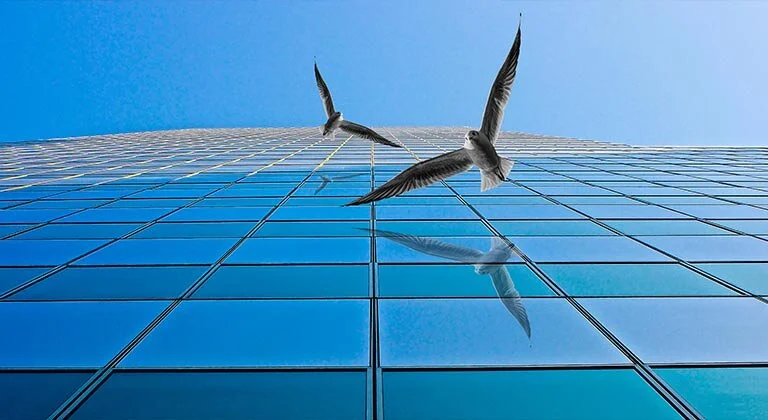
New York City's new bird-friendly law, which took effect Jan. 10, 2021, is good news for wildlife advocates and, of course, for the birds. But what will it mean for architects, engineers and designers, who must comply with regulations to keep birds from flying into windows in a city of glass skyscrapers? The new law applies both to construction and to renovations.
Audubon scientists estimated that 240,000 birds die annually in the city from crashing into windows; nationwide, the number is about a billion. Most of these birds aren't pigeons, either: Many are songbirds and other species en route during annual migrations. Tired during the long flights, many mistake reflections in glass windows for tree canopies where they can rest.
Bird's eyes are different from humans'--you can tell this by looking at them. They don't see in 3-D, and can't see glass but only what is reflected in it.
Lowering the Threat Factor
New York City's new law, which joins a host of other cities with bird-friendly regulations, uses the American Bird Conservancy's Material Threat Rating to guide builders. The lower the threat factor, the less dangerous to birds. A threat factor of 25 or less is required for exterior walls and "bird hazard installations" such as railings and glass acoustic barriers. "Fly through conditions," which would lead birds to think they could fly through an area because of panes of glass, should also be avoided.
Patterns in the Glass
Use of etchings, frits and other patterns in glass can also be incorporated into designs while also making it safer for birds. UV film also can be used.
Spacing also is important. Birds cannot fly through spaces less than 4 inches wide or 2 inches high, according to the Audubon Society.
Following Flight Patterns
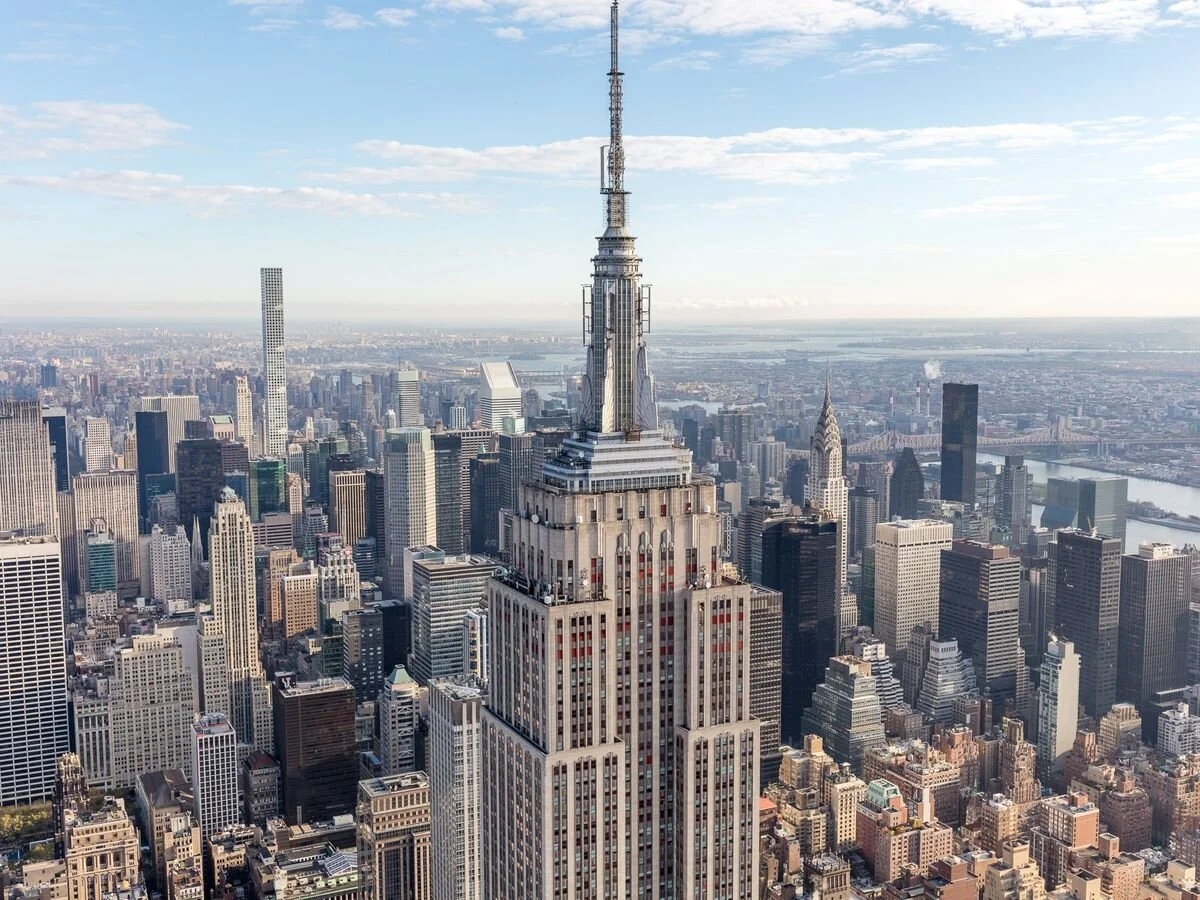
In a city with 6,000 high-rise buildings and 274 skyscrapers over 492 feet tall, it's perhaps surprising that the regulations are for low-level buildings and the floors of skyscrapers closer to the ground.
That's because it follows the flight patterns. While migrating birds can fly up to 10,000 feet and more, they are drawn to the tree canopies that may be in green space near the buildings--not so much to the upper levels. So low-rise buildings are more in the flight paths, and affected by the new law.
Buildings with green roof systems, according to the new law, must be constructed with bird friendly materials up to 12 feet from the ground or walking surface.
Way of the Future
While New York City's law is new, many buildings already have bird friendly features. The Jacob Javits Center, formerly known as the city's biggest bird killer, reduced collisions by 90% after renovations.
Another site notorious to bird advocates, Minneapolis' U.S. Bank Stadium, is in the public eye after a $300,000 study, with Audubon and others calling for the Vikings' stadium to be retrofitted with bird friendly features. Minnesota has since also passed bird-friendly construction rules.
While cities including Portland, Toronto and Oakland have municipal bird-friendly building laws, no federal law is in place. U.S. Representative Mike Quigley has several times introduced a Federal Bird-Safe Buildings Act, most recently in 2019.
So how do humans benefit from bird-friendly legislation? To start with, much of it is in line with what's environmentally friendly as well. Bird-safe windows often conserve energy. In addition, what's good for the birds is good for humans: They control pests, pollinate and spread seeds as they travel, and are an important part of the world's ecosystem, according to Bird Life International.
Rather than being a regulatory chore, compliance with the new bird friendly law can challenge designers to creatively meet the needs of a changing environment with a focus on the future.
Questions? Refer to the city regulations.
Environmental, health and safety consultants The Casa Group Inc. of New York City can also answer your questions.
The CASA Group, Inc. offers personalized, solutions-oriented consulting expertise, within the construction and development market through the motivation and intellect of our people.
Founded by Michael Rattacasa